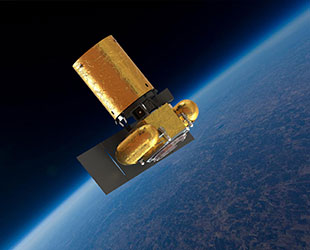
The number one roadblock on the way to space is access to launch vehicles. The cost of launch is by far the most expensive part of a satellite campaign; You can build a high quality, small, capable satellite for 100,000 dollars if you are creative and thrifty, but a ride to space on a rocket costs at least 2-3 million, and even then smaller payloads have almost no control over when and where the rocket launches.
In addition to being outrageously expensive, rockets are also bad for the environment. The Space Shuttle Main Engines burn about a half-million gallons of fuel during lift-off and acceleration, producing 28 tons of carbon dioxide, and, according to
Discover Magazine, "23 tons of harmful particulate matter settle around the launch area each liftoff, and nearly 13 tons of hydrochloric acid kill fish and plants within half a mile of the site." Furthermore, rockets are not reusable.
Besides the cost and environmental damage, rockets are complicated! Rocket engines and their fuel systems are so complex that only three countries have ever put people in orbit. And once you figure out how to do it, the risk of something going wrong is incredibly high. In the last 45 years,
15 people have died during the take-off or re-entry phases of their mission.
It makes you wonder who said "Hmmm. Clearly the easiest, safest way to get to space is to fill a giant tube with explosives, put some people in the tip, and light it on fire." (For the record, it was Jules Verne who, in 1865, wrote the
novel that inspired the movement to send people to space in rockets, although he proposed using a giant cannon to escape Earth.) Why not, say, build a really long ladder reaching from Earth into space, and keep climbing until you have escaped the Earth's gravitational pull, then let go? Ouala! - you are in orbit.
 |
Tsiolkovsky, looking old and wise.
(Source: Wikipedia) |
In fact, someone did have this idea. In 1885, 30 years after Verne published his novel, Russian scientist Konstantin Tsiolkovsky was inspired by the Eiffel Tower to propose just such a system. His design included a "celestial castle" at the top of a spindle-shaped cable that reached out 22,238 mi above sea level, which is the altitude required for geo-stationary orbit.
Tsiolkovsky never built his elevator (though he is considered a founding father of rocketry), but the basic principles behind space elevator design have not changed since his original proposal. All space elevator designs include a giant cable attached to Earth's equator that reaches up into space. The centripetal force provided by the Earth's rotation keeps the cable extended and stationary above a point on Earth. (Imagine holding on to a long string and spinning around in place - the string flies around you in your orbital plane, extending out from your hand). Designs also include a counter weight at the space end of the cable - like Tsiolkovsky's celestial castle - that provides enough mass to keep the cable straight. (Tie a tennis ball to the end of your string - it now flies out straight from your arm rather than curving away from the direction of motion). Once the cable is in place, a robot can simply climb the cable, starting from Earth. Traveling at 180 mph - the speed of a fast train - a climber could reach GEO orbit in about 5 days. And by the time it got to the end, it will have achieved orbital velocity (taken from the Earth's rotation). It could toss a satellite out the window and call it a day. No rockets required.
So why don't we have a space elevator yet?
 |
Diagram of a space elevator. The height relative
to the diameter of the Earth on the diagram is
to scale. The height of the counterweight varies
by design and a typical, workable height is
shown. Source: Wikipedia. |
The major difficulty is in finding a sufficiently strong material with which to construct the cable. Tension on the cable increases with distance from Earth, so the cable must grow exponentially wider as it moves away from Earth in order to sustain the force of the cable below it, and provide a centripetal force to the cable and counter-weight above it. (If you use a flimsy string to swing your tennis ball around, it breaks by the tennis ball, not near your hand, right?) The cable must therefore be made of a material with an extremely high specific strength. Currently, the only materials with the requisite strength are carbon nanotubes, which were developed at MSFC in the 90s, and are difficult to create and connect to form a long, low-mass cable while still preserving their strength, though research continues.
Other challenges include handling space-trash collisions at LEO altitudes without damaging the cable, designing a climber that can scale a cable that varies in thickness (some current designs have rollers that use friction to roll up the cable), and deciding what to use for the counter-weight (maybe material that is ferried up from Earth along the cable, or perhaps a captured asteroid?). There are also more complicated concerns, like managing cable oscillations and vibrational nodes as climbers move up and down, or satellites are launched off of the cable at various altitudes.
Though it is not necessarily on the general public's radar, the space elevator concept is being actively explored by the space community. NASA has long supported the idea, mostly through financing competitions and prizes to encourage innovation in the area. The US-based group Liftport hopes to use crowd-sourced fundraising (via Kickstarter) to design and build a moon-based space elevator, which would allow astronauts to gently descend to the lunar surface from orbit, and then climb away again. Astronauts or robots would launch from Earth in a rocket and rendezvous with the elevator cable at a base station located in the L1 Lagrange point between Earth and the Moon. (Here is a video of a test the group performed 6 years ago using a prototype robot to climb a cable held aloft by giant helium balloons). In February the Daily Yomiyuri reported that Japanese construction firm Obayashi Corp, (the same company that is currently refurbishing the Golden Gate Bridge), has announced plans to build a space elevator by 2050 that would shuttle 30 people to space at a time, and in November 2011 the New York Times reported that Google has been secretly working away at a space elevator design in its Google X lab in Mountain View.
With private companies like SpaceX, Virgin Galactic, and Sierra Nevada Corp (to name just a few) entering the market and competing for contracts at a faster pace than ever before, I think it is probable that we will have cheaper, more reliable rockets years before we have a cheap, reliable space elevator. But that is beside the point. What will happen when a weekend trip entails a casual train ride the edge of outer space? Or when designing satellites to be small, light, and compact is no longer necessary? Or when you can stretch out a net to capture passing space trash, or build a permanent science laboratory at any altitude? A space elevator wouldn't just replace rockets, it would open up outer space to a whole new world of possibilities.