Showing posts with label NASA. Show all posts

Friday, May 17, 2013

Kepler Loses Another Reaction Wheel.

It was Deja Vu all over again yesterday, as the Kepler team at NASA announced the probable failure of the spacecraft's second reaction wheel. Kepler is a NASA satellite searching for exoplanets (planets outside our solar system) by finding stars with periodic variation in their brightness, which would indicate planets passing in front of them. Kepler needs three working reaction wheels in order to maintain the necessary level of pointing precision for science operations. It lost reaction wheel #2 back in 2012, so it's been operating without a spare ever since. I first wrote about Kepler in January 2013, when Reaction Wheel #4 (the second reaction wheel to exhibit problems) was showing signs of degradation and poor performance. After a ten day rest period, which operators hoped would redistribute lubricant in the reaction wheel and allow it to spin more easily, the Kepler team returned the spacecraft to full operations with the hopes that the wheel could hang in there. Turns out, it couldn't.
The location of Kepler's reaction wheels.
Source: NASA

On Wednesday NASA announced that the wheel seemed to have failed again. During a semi-weekly contact with Kepler, operators found the spacecraft unexpectedly in safe mode, which is what the spacecraft does when it detects something is wrong. In this mode it ceases science operations and faces the sun to gather as much power as possible, allowing the communicating line with Earth to drop in and out as it spins around the Sun. When operators commanded the reaction wheels to stop rotating the vehicle in order to maintain the communication link, reaction wheel 4 stopped spinning, but maintained full torque, meaning that it was trying as hard as it could to spin up but was not moving at all. This behavior likely indicates a structural failure of the wheel bearing. In other words, bad news bears.

NASA says the Kepler mission was originally only 3.5 years, so technically Kepler completed all of its mission goals. However, it is standard for missions like this to low-ball the life expectancy so that they can tell congress it will cost less, and claim 100 percent mission success even if something goes wrong later in the life of the spacecraft. In reality, missions are often extended for 2-5 times the original mission life. When Kepler reached its original 3.5 year mission goal in 2012, funding for the satellite was extended for six more years. There had been more noise than anticipated in Kepler's data, due to worse than expected signal and more noise than anticipated in the spacecraft, so observations were taking longer than originally expected. It was estimated that Kepler would take until 2015 to fulfill all of it's mission goals. So, if Kepler is headed for hospice, it will have reached it's originally planned mission life, but not entirely fulfilled it's mission goals.

But all is not lost! Kepler operators have not given up on attempts to resuscitate the wheel. They plan to try jump starting it by sending start and stop commands in rapid succession, and perhaps spinning it in the opposite direction. If all attempts fail, they may investigate pursuing other science goals using a scanning mode, where 3-axis control is not necessary.

Even if rejuvenation in some form is not possible, the mission is far from a bust. Kepler has made significant contributions to science and the search for planets. It has identified 2740 candidate stars, and led scientists to estimate that there are at least 17 billion Earth-sized exoplanets in the Milky Way Galaxy alone. There is also a huge trove of data from Kepler that has not been analyzed yet, and will provide fodder for research and discovery for years to come. There may very well be data revealing an Earth-sized star in the habitable zone of a far-away planet, just sitting on a server somewhere waiting to be extracted. And Kepler is just the beginning of that search - NASA is already planning the next generation of exoplanet-finding telescopes, starting with TESS, which would launch in 2017.

Wednesday, February 13, 2013

Landsat 8 Launches Successfully!

The title of this post could actually be "Live video of Landsat launch blows my mind". Landsat was launched atop a United Launch Alliance (ULA) Atlas V 401 rocket with live video coverage from aboard the rocket throughout the various stages of the launch streaming to the web for anyone to watch. The best part of the coverage was the end, when a camera on the rocket booster showed the separation of Landsat 8 from the booster, with a backdrop of the rising sun above a crescent Earth. See for yourself, and just try to hold your jaw closed:


Those flashes visible in the lower right hand corner as the satellite drifts away are not UFOs, as some might think, but are likely tumbling space junk catching the light of the rising Sun.

NASA reports that the satellite began communicating with Earth and charging its batteries shortly after separation from the booster rocket, and is doing well. However, the mission has been having issues with its remote ground stations in Fairbanks, AK and Sioux Falls, SD, which pose little threat to the spacecraft and will hopefully be sorted out soon.

The Landsat Data Continuity Mission will be renamed to Landsat 8 and handed off to the US Geological Survey after the satellite has been commissioned. The Landsat program has been imaging the entire globe every 8 days since 1972 at a 30 meter resolution, providing beautiful and informative pictures and enabling scientists to track the evolution of the Earth due to both natural and unnatural causes. Here are a couple of my favorite Landsat pictures:
The shrinking of the Aral Sea due to the diversion of its waters for irrigation in central Asia.
Source: NASA/GSFC
A complete, cloud-free image of Antartica, pieced together from hundreds of images taken over time.
Source: NASA/GSFC

Monday, January 21, 2013

Planetary Resources Reveals Telescope Prototype

An artist's rendition of the Arkyd-100 in orbit.
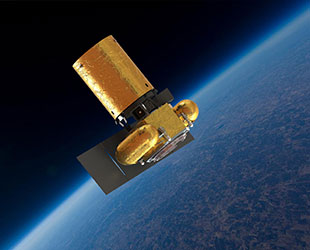
Planetary Resources, the startup aiming to make billions of dollars mining platinum from asteroids in our solar system, recently revealed their prototype for the Arkyd-100 Space Telescope. A fleet of these telescopes will eventually be launched to search for minable, accessible, asteroids. It is an amazingly small and compact 11 kg satellite with small deployable solar arrays - significantly smaller than the prototype they previously debuted. The telescope is compact for launch, but can be extended several inches once deployed in space, increasing its focal length.

Among the most interesting revelations is the company's plan to use the telescope for laser communications rather than relying on a network of radio dishes. Laser communications is a really neat technique. Basically, instead of sending telemetry and images over modulated longer-wavelength radio waves (like most satellites do to communicate with ground stations on Earth), you use shorter-wavelength waves in the visible spectrum. This has many benefits:
  • Because shorter wavelengths have higher energy, you can transmit information at a much higher density, or data rate.
  • Radio and television stations transmit in the radio wavelengths, so anyone operating a radio transmitter needs a license to avoid interference. The optical spectrum has none of these restrictions.
  • Laser receptors/transmitters on the ground are much smaller and cheaper to build and operate than their radio counterparts.
  • For satellites with imaging payloads, the telescope can be used both as an optic to collect light (take images or receive information) and as a laser to send it (transmit images to the ground). there is no need for a separate radio antenna that takes up room and adds mass to a satellite.
The main drawback of laser communications is that water vapor in Earth's atmosphere absorbs waves in the visible spectrum (that's why it's dark on a cloudy day). Moreover, it requires extremely precise pointing in order to hit receptors on Earth. This is why long-range laser communications are currently only widely used in space-based satellite to satellite communications where water vapor is not an issue. However, if these obstacles can be overcome (by using continual weather analysis to find clear areas with no clouds and arid climates to transmit, and building robust stabilization systems to point the spacecraft), then laser communication can be an incredibly efficient and cheap option. Planetary Resources says it is under contract with NASA to develop this technology for use on future government-funded satellites.

The company says it hopes to sell its satellites to other companies to help fund its ultimate goal of retrieving and selling valuable platinum from an asteroid. I will certainly be watching as their design matures and progresses!

You can watch their informational video, which includes a small tour of their facilities, here.

Friday, January 18, 2013

Kepler Reacts to a Sticky Wheel

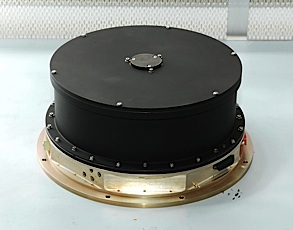
In a Kepler Mission Manager Update, NASA announced today that the Kepler mission is temporarily ceasing science operations due to increased friction in reaction wheel #4. Kepler is a NASA satellite that has been searching for Earth-like planets around nearby starts since it launched in 2009. Reaction wheels are used to maneuver satellites and other spacecraft requiring fine, continuous pointing control. A motor spins up the reaction wheel in one direction, which causes the spacecraft to spin in the opposite direction. Spacecraft almost always have 4 reaction wheels: one for each axis of rotation, and one spare. If two or more reaction wheels fail, the spacecraft loses it's ability to attain and hold commanded positions. For a telescope like Kepler, where steady pointing is critical to collecting high quality images of faint stars, this is a mission ending-anomaly.

The type of reaction wheel used on Kepler
Source: Ball Aerospace
This isn't the first road bump for Kepler. The spacecraft experienced problems with reaction wheel #2 back in July 2012, and took steps to mitigate future risk at that time. Among other things, they decided to increase operational temperatures  (likely to keep the lubricant in the wheels warmer);  increase spin-rates (because the faster wheels spin, the less likely they are to get stuck, and the more the lubricant gets distributed nicely), and implement bi-directional rotation (to even out any use-related wear and tear).

Reaction wheel side view
The Kepler operations team is dealing with this latest threat to the mission by putting Kepler in a ten day "rest period" to give the wheel's lubricant time to become more evenly distributed. During this time the wheels will not be used, and a modified safe mode attitude (where the solar arrays are pointed at the sun to keep the spacecraft power-positive) will be maintained using thrusters.

Reaction wheel problems seem to be prevalent lately, especially in high profile missions. In August, Operators for the Dawn Mission also experienced complications or failures with two of its reaction wheels. Dawn had already lost a reaction wheel in June 2010 when it lost a second wheel in August. It is now using an inventive combination of the two remaining reaction wheels and its hydrazine thrusters to point the spacecraft (this solution is not sufficient for the strict pointing requirements of Kepler).

It is interesting to note that the operations teams identified the anomaly differently in each case. Kepler operators noticed that the amount of torque needed to change the spin rate of its reaction wheel was higher than normal during a semiweekly contact with the spacecraft, indicating increased friction in the wheel. Dawn operators became aware of the problem when the spacecraft software detected the problem and initiated an automatic shut down of the wheel.

Monday, September 3, 2012

What (on Earth) is a Space Elevator?

The number one roadblock on the way to space is access to launch vehicles. The cost of launch is by far the most expensive part of a satellite campaign; You can build a high quality, small, capable satellite for 100,000 dollars if you are creative and thrifty, but a ride to space on a rocket costs at least 2-3 million, and even then smaller payloads have almost no control over when and where the rocket launches.

In addition to being outrageously expensive, rockets are also bad for the environment. The Space Shuttle Main Engines burn about a half-million gallons of fuel during lift-off and acceleration, producing 28 tons of carbon dioxide, and, according to Discover Magazine, "23 tons of harmful particulate matter settle around the launch area each liftoff, and nearly 13 tons of hydrochloric acid kill fish and plants within half a mile of the site."  Furthermore, rockets are not reusable.

Besides the cost and environmental damage, rockets are complicated! Rocket engines and their fuel systems are so complex that only three countries have ever put people in orbit. And once you figure out how to do it, the risk of something going wrong is incredibly high. In the last 45 years, 15 people have died during the take-off or re-entry phases of their mission.

It makes you wonder who said "Hmmm. Clearly the easiest, safest way to get to space is to fill a giant tube with explosives, put some people in the tip, and light it on fire." (For the record, it was Jules Verne who, in 1865, wrote the novel that inspired the movement to send people to space in rockets, although he proposed using a giant cannon to escape Earth.) Why not, say, build a really long ladder reaching from Earth into space, and keep climbing until you have escaped the Earth's gravitational pull, then let go? Ouala! - you are in orbit.
Tsiolkovsky, looking old and wise.
(Source: Wikipedia)

In fact, someone did have this idea. In 1885, 30 years after Verne published his novel, Russian scientist Konstantin Tsiolkovsky was inspired by the Eiffel Tower to propose just such a system. His design included a "celestial castle" at the top of a spindle-shaped cable that reached out 22,238 mi above sea level, which is the altitude required for geo-stationary orbit.

Tsiolkovsky never built his elevator (though he is considered a founding father of rocketry), but the basic principles behind space elevator design have not changed since his original proposal. All space elevator designs include a giant cable attached to Earth's equator that reaches up into space. The centripetal force provided by the Earth's rotation keeps the cable extended and stationary above a point on Earth. (Imagine holding on to a long string and spinning around in place - the string flies around you in your orbital plane, extending out from your hand). Designs also include a counter weight at the space end of the cable - like Tsiolkovsky's celestial castle - that provides enough mass to keep the cable straight. (Tie a tennis ball to the end of your string - it now flies out straight from your arm rather than curving away from the direction of motion). Once the cable is in place, a robot can simply climb the cable, starting from Earth. Traveling at 180 mph - the speed of a fast train - a climber could reach GEO orbit in about 5 days. And by the time it got to the end, it will have achieved orbital velocity (taken from the Earth's rotation). It could toss a satellite out the window and call it a day. No rockets required.

So why don't we have a space elevator yet? 
Diagram of a space elevator. The height relative 
to the diameter of the Earth on the diagram is 
to scale. The height of the counterweight varies 
by design and a typical, workable height is 
shown. Source: Wikipedia.
The major difficulty is in finding a sufficiently strong material with which to construct the cable. Tension on the cable increases with distance from Earth, so the cable must grow exponentially wider as it moves away from Earth in order to sustain the force of the cable below it, and provide a centripetal force to the cable and counter-weight above it. (If you use a flimsy string to swing your tennis ball around, it breaks by the tennis ball, not near your hand, right?) The cable must therefore be made of a material with an extremely high specific strength. Currently, the only materials with the requisite strength are carbon nanotubes, which were developed at MSFC in the 90s, and are difficult to create and connect to form a long, low-mass cable while still preserving their strength, though research continues.

Other challenges include handling space-trash collisions at LEO altitudes without damaging the cable, designing a climber that can scale a cable that varies in thickness (some current designs have rollers that use friction to roll up the cable), and deciding what to use for the counter-weight (maybe material that is ferried up from Earth along the cable, or perhaps a captured asteroid?). There are also more complicated concerns, like managing cable oscillations and vibrational nodes as climbers move up and down, or satellites are launched off of the cable at various altitudes. 

Though it is not necessarily on the general public's radar, the space elevator concept is being actively explored by the space community. NASA has long supported the idea, mostly through financing competitions and prizes to encourage innovation in the area. The US-based group Liftport hopes to use crowd-sourced fundraising (via Kickstarter) to design and build a moon-based space elevator, which would allow astronauts to gently descend to the lunar surface from orbit, and then climb away again. Astronauts or robots would launch from Earth in a rocket and rendezvous with the elevator cable at a base station located in the L1 Lagrange point between Earth and the Moon. (Here is a video of a test the group performed 6 years ago using a prototype robot to climb a cable held aloft by giant helium balloons).  In February the Daily Yomiyuri reported that Japanese construction firm Obayashi Corp, (the same company that is currently refurbishing the Golden Gate Bridge), has announced plans to build a space elevator by 2050 that would shuttle 30 people to space at a time, and in November 2011 the New York Times reported that Google has been secretly working away at a space elevator design in its Google X lab in Mountain View. 

With private companies like SpaceX, Virgin Galactic, and Sierra Nevada Corp (to name just a few) entering the market and competing for contracts at a faster pace than ever before, I think it is probable that we will have cheaper, more reliable rockets years before we have a cheap, reliable space elevator. But that is beside the point. What will happen when a weekend trip entails a casual train ride the edge of outer space? Or when designing satellites to be small, light, and compact is no longer necessary? Or when you can stretch out a net to capture passing space trash, or build a permanent science laboratory at any altitude? A space elevator wouldn't just replace rockets, it would open up outer space to a whole new world of possibilities. 

Saturday, August 25, 2012

Mars Science Laboratory Beams Back Landing Video

The HIRISE spacecraft photographed MSL as it was parachuting down to
the Martian surface. Credit: NASA.
I haven't posted about the Mars Curiosity rover yet, because it has been thoroughly covered by other news sources and I've just been enjoying reading about all of its success so far. However, NASA just released the video of Curiosity's descent, as viewed from the spacecraft itself. It is pretty incredible to see such high quality video of the fantastic landing, which was a feat of creativity, sophisticated software, and brilliant systems integration.

Mike Wall, from Space.com, describes what you will see in the video:
The high-definition video chronicles the final 2.5 minutes of Curiosity's 7-minute plunge through the Martian atmosphere in real time, starting just after the rover jettisoned its heat shield. The first few seconds show the heat shield falling away toward the red dirt of Gale Crater far below. 
Other milestones follow, such as parachute deploy and ignition of the engines on Curiosity's "sky crane" descent stage, which lowered the 1-ton rover to the Martian surface on cables. Audio from mission control at NASA's Jet Propulsion Laboratory (JPL) in Pasadena, Calif., plays over the video, describing the nail-biting action
As Curiosity nears the Martian surface, huge dust clouds billow around the $2.5 billion robot, kicked up by the sky crane's rockets. Then the view clears to show a close-up, static shot of scattered pebbles.

If you haven't seen it yet, watch 7 Minutes of Terror, the movie trailer-esqu video simulation of the landing sequence before watching the real thing.

7 Minutes of Terror:

Real video of MSL descent:

Saturday, June 30, 2012

The B612 Foundation


Antoine de Saint-Exupéry's Little prince on the original B612 asteroid.
On June 28th, the B612 foundation announced its plans to build, launch, and operate a deep-space telescope, Sentinel, which will find and map asteroids that could pose a danger to planet Earth. The official press release summarizes the mission:
“The orbits of the inner solar system where Earth lies are populated with a half million asteroids larger than the one that struck Tunguska (June 30, 1908), and yet we’ve identified and mapped only about one percent of these asteroids to date, said Ed Lu, Space Shuttle, Soyuz, and Space Station Astronaut, now Chairman and CEO of the B612 Foundation. “During its 5.5-year mission survey time, Sentinel will discover and track half a million Near Earth Asteroids, creating a dynamic map that will provide the blueprint for future exploration of our Solar System, while protecting the future of humanity on Earth.”
The B612 foundation has actually been around since 2001, working towards its mission of protecting Earth from a potentially disastrous asteroid impact. Prior to yesterday's announcement they had been focusing on technologies that could deflect threatening asteroids away from Earth's orbit, such as gravity tractors, kinetic impactors, and nuclear vaporization. However, they eventually realized that these technologies would be useless if no one knows the asteroid is coming, and that nobody was doing anything to find and track the most threatening asteroids. the organization's website explains: 
"NASA’s Spaceguard survey has succeeded in mapping 90 percent of the largest NEAs (larger than 1 km), yet due to the limitations of searching for asteroids using mostly ground based optical telescopes, only about one percent of these asteroids larger than Tunguska have been discovered and tracked to date. We are essentially flying around the Solar System with our eyes closed." 
The foundation estimates that in 5.5 years, Sentinel will have identified around half a million Near Earth Asteroids, with enough temporal information to project their orbits 100 years into the future. They think there is a 50% chance that the mission will identify at least one asteroid on a collision course with Earth that will need to be deflected in order to prevent a potentially catastrophic Earth impact.
The Sentinel Telescope (preliminary design by Ball Aerospace).
Source: B612


The Sentinel telescope will operate in the infrared, where asteroids stand out against the cold blackness of space, and be built by Ball Aerospace, the same folks that built the Kepler, Spitzer, and Hubble telescopes. It will be placed into an orbit similar to Venus's. This orbit will allow it to scan the side of the Sun opposite from Earth, which it would not be able to do if it were in orbit around Earth. However, it will also make operations and communications tricky because its distance from Earth will vary between 30 - 170 million miles, as opposed to the much more cozy 350 milles between Earth and Hubble. This is difficult but by no means unheard of - we have been operating spacecraft on Mars and beyond for tens of years. Current estimates put launch in 2017-2018, aboard one of SpaceX's Falcon 9 rockets.


Sentinel's orbit, which will allow it to map the side of the Sun opposite from Earth.
Source: B612 foundation. 
The B612 Foundation has signed a Space Act Agreement with NASA in June 2012, under which NASA will provide communications, tracking, and technical support for the Sentinel Mission. However, B612 is a nonprofit 501(c) 3 organization that "intends to raise the money for the Sentinel Mission in a manner similar to philanthropic capital campaigns for civic projects." If they do it right, and take advantage of flashy publicity videos and social media, I bet they could raise the necessary money very quickly - this is a subject that people can easily get excited about. 


Kudos to the B612 foundation for taking on a huge but necessary project. As John Stuart recently put it, "Do you know how rarely the news in 2012 looks and sounds how you thought news would look and sound in 2012?"


Thursday, June 14, 2012

Repurposing a Spy Satellite

On June 4, NASA announced that they have acquired two spy satellites from the National Reconnaissance Office (NRO). The satellites include extremely high quality telescopes with 2.4 meter collection mirrors - the same size as Hubble, and much better quality. For reference, that kind of light-collection power would allow you to see a dime on top of the Washington Monument (or what Kim Jong-un is eating for dinner). The donation is a windfall to NASA's cash-strapped astronomical research program, which will likely turn the impressive optics towards space in the Wide Field Infrared Survey Telescope (WFIRST) project to hunt for dark energy, IF, that is, they can scrape up enough money to launch and commission one of the telescopes. That kind of money may not be available for several years.
The donated satellites have better quality
optics than the Hubble telescope.


It's nice to see where our national priorities lie - as NASA's Planetary Science department literally holds bake sales to raise money and awareness about budget cuts (Obama's 2013 budget cuts 21% from NASA's planetary-science budget, and 38% from its Mars projects,) the NRO has two Hubbles lying around, collecting dust. Of course, we must remember that the NRO deals with very, very important issues of national security, whereas NASA is just playing around with trivial matters of casual public interest, like investigating the mysterious energy that permeates space and accounts for 73% of all matter in the universe.

Saturday, May 26, 2012

Can Constellation Rise from the Ashes?

Back in 2010 the Obama administration canceled Constellation, Bush's space program that would have sent US astronauts back to the moon, and eventually to Mars and beyond. I do not agree with President Bush on very much, but his ambition and vision for NASA was laudable, and I was sad when they cancelled Constellation. Despite being “over budget, behind schedule, and lacking in innovation due to a failure to invest in critical new technologies” according to the White House's budget plan, Constellation did provide an exciting and inspiring goal: Mars. The same cannot be said of Obama's replacement plan to focus on "building block technologies" and eventually send US astronauts to an asteroid. The goal is not nearly as romantic, and half the US population thinks it has already been accomplished. Moreover, with the recent explosion of Planetary Resources onto the public stage, we now see that there are market forces sufficient to propel private sector missions to asteroids; the same cannot be said of missions to Mars. In this new age of privatized space, NASA's main goal should be to fund innovative research and missions that would not otherwise be funded due to a lack of immediate profitability. But I digress. 


The Liberty launch vehicle combines the proven systems from NASA's space shuttle fleet and 
Europe's Ariane 5 expendable rocket. This graphic shows how they combine into the new 
ATK-Astrium Liberty rocket. CREDIT: ATK
It now seems that Constellation might just make like a Phoenix and rise from the congressional ashes. Development of the Orion Crew Module, which would have carried astronauts to Mars, has continued under the new title of "Multi-Purpose Crew Vehicle" (MPCV) since program cancellation. And now it looks like the heavy-lift vehicle, (née Ares 1), which would have propelled Orion into space, is not completely dead either. On May 9th, Alliant Techystems (better known as ATK) announced plans to combine the first stage of the Ares 1, a five-stage solid rocket booster, with the second stage of the European Space Agency's Ariane V rocket, which has been in use since '96, to make the "Liberty Rocket". These rocket stages would be topped with ATK's own Orion spinoff, with a composite structure and less robust heat shield than the metal Orion system since ATK's version would only be reentering the atmosphere from LEO instead of deep space and thus have half the energy to dissipate upon reentry. ATK plans to develop the Liberty Rocket system into a full-fledged commercial enterprise, carrying crew and cargo into low earth orbit for both NASA and other commercial space venture companies. ATK thinks it can move quickly through development and testing since the first two rocket stages have already been tested thoroughly. They hope to launch their first test flight by 2015.


I'm glad to see that the billions of dollars and thousands of hours of hard work already poured into Orion and Ares may not have been for naught, but I have reservations about the frankenstein nature of Liberty. Rand Simberg, in a great summary of the program, pointed out that using the Ariane V as a second stage (rather than as a first stage, as it has been used by the ESA) will mean coordinating in-flight ignition of the very complex combustion engine. The difficulty of pulling this off is one of the reasons that the Space Shuttle's SSME was abandoned by NASA's Constellation team for the J2-X. 


I also can't imagine that integrating 3 different rocket stages, built by three different companies, will yield an elegant, cost-effective, or scalable result. The Ariane 5 brings 15 years of ESA heritage technology with it, the Ares rocket undoubtedly possesses the marks of 60+ years of NASA history, and the Orion capsule is being developed by Lockheed Martin, which has its own hefty share of heritage. The plan greatly undervalues the benefits of in-house design. SpaceX, for example, built their entire system (rocket and capsule) from scratch in-house. The mechanical engineers building the Falcon engines eat lunch with the electrical engineers designing the Dragon capsule and the systems engineers building the operational plans (I saw this with my own eyes when I visited SpaceX headquarters in 2010). While an ATK systems engineer will have three sets of clumsy and likely incomplete documentation to sift through, and none of the original designers to help with the task, a SpaceX engineer who wants to know why something was built a certain way merely has to find the person who designed it and ask. ATK's kludged-together rocket might be cheap and fast now, but I doubt that it will be scalable or easily updated in the long-term. 


In any case, it is likely that Liberty - which will require support from the Ares team - will receive support from members of Congress who championed Constellation and would like to see those jobs return to their districts. It will be interesting to see how Liberty changes course once it enters the political sphere.

Friday, May 25, 2012

The New Space Race


The AP had a great article by Seth Borenstein recently about the New Space Race, highlighting all of the companies currently working on programs to shuttle cargo and/or people to space. This, of course, is old news, but it's great to see the industry finally getting some serious attention from the press now that SpaceX is doing things for NASA that are useful (and profitable...at least eventually). A couple eye-opening excerpts:

"There are now more companies looking to make money in orbit — at least eight — than major U.S. airlines still flying."

"There are already eight different licensed spaceports in the U.S. where companies can launch from and most of them have no connection to NASA."

Of the companies mentioned by Borenstein, five (SpaceX, Orbital Sciences, Boeing, Sierra Nevada, and Blue Origin) have received money from NASA and are aiming to reach the ISS within the next 5 years. Orbital is the closest behind SpaceX, with a trip to the ISS scheduled for November.

XCor's "Rocket Racer" Looks surprisingly lightweight and
simple. It will carry space tourists on suborbital flights.
In addition to the companies looking to make money from NASA by building ISS shuttles, there are several companies looking to make money the old-fashioned way - by finding people who have too much money and offering a service they can spend it on. I previously wrote about SpaceX and Bigelow's deal to shuttle space tourists to a space hotel. Space Tourism is also being pursued by Virgin Galactic (Richard Branson's company), and XCor Aerospace, who hope to send tourists on day-trips to space. Their reusable spaceships will take off from an airplane runway and reach sub-orbital altitudes, giving passengers several minutes of zero G, and some fantastic views of the Earth, before landing again.

So how much will a space vacation set you back? XCor and Virgin are not publishing prices, but Space Adventures, which has been helping rich people get to space since 2010, charges $20 million for a trip to the ISS, but has accepted $5 million down-payments for sub-orbital flights. I'm guessing that XCor and Virgin are hoping to undercut this price point significantly. Still, it will likely only be affordable to the 1%. But who knows, with the current pace of innovation in the space industry, maybe in 2040 the middle classes will be complaining about leg room in their space shuttle.

Wednesday, May 23, 2012

SpaceX Launches Dragon Capsule

After a two day delay due to an anomaly in one of the rocket engines, SpaceX's falcon 9 rocket blasted off early this morning, launching a Dragon capsule filled with cargo for the ISS.
There was plenty of news coverage of the event, but there were three little tidbits that I especially enjoyed.
  1. The description of the humorous juxtaposition of the young, casual, SpaceX mission controllers with the suited NASA old guard in the control room: "Many of the SpaceX controllers wore untucked T-shirts and jeans or even shorts, a stark contrast to NASA’s old suit-and-tie shuttle team."
  2. View from Spacex's Dragon spacecraft looking outward
    at one of two solar array panels in the process of deploying.
    Source: SpaceX
  3. The picture that @SpaceX tweeted of the Dragon capsule solar arrays after they deployed. News reports say the cheering in the control room after the successful deployment of the solar arrays was almost louder than the cheering following the successful launch. In many ways, deploying the solar arrays is the most stressful, high stakes activity of commissioning. It takes less force, and different mechanics, to deploy arrays in a zero G environment than it does on Earth. In fact, many spacecraft (like the James Webb Telescope) are never able to fully test solar array deployment on Earth; gravity makes the solar arrays too heavy to operate with the motors that will be used in space. Operators must trust in the capability of the mechanical engineers and software simulations without ever testing the full deployment procedure. I have a friend who was working on a satellite at Space Systems Loral when one of the solar arrays failed to deploy during commissioning. In a last ditch effort to save the spacecraft they fired a spacecraft thruster at the array to try to push it out, and ended up losing whatever capability they had from the partially deployed array by blowing a hole through it. The satellite is now a very expensive piece of space junk, floating around in GEO with 100 million dollars worth of expensive, cutting edge technology and equipment, and no power. 
  4. The smaller, public interest news articles about Celestis, the for-profit company that sent the ashes of 300 people to orbit aboard the Falcon 9. The "special payload" included the remains of James Doohan (Scotty, from Star Trek) and Gordon Cooper (one of the famous Mercury 7 astronauts). The ashes were in the second stage of the Falcon 9 rocket, which was jettisoned about 10 minutes after launch and will remain in orbit for about a year before its orbit decays and it burns up in Earth's atmosphere. This was actually the backup flight for Celestis - the first round of ashes failed to make it to orbit on the botched 2008 SpaceX launch that crashed into the Pacific Ocean.
Congrats to SpaceX! I am excited to follow the mission over the next two weeks as the Dragon performs several maneuvers and is eventually grabbed by ISS astronauts using the station's robotic arm. The SpaceX Ops team has a lot on their plate - It must be an incredibly exciting experience, but I don't envy the pressure on them or their likely sleep schedule for the next two weeks!

Monday, May 14, 2012

Поздравляю!

The Soyuz blasts off from Kazakhstan
AP Photo/Mikhail Metzel
A hearty Поздравляю! to NASA Astronaut Joe Acaba and the two Russian cosmonauts who blasted off last night in a Soyuz capsule headed for the ISS. If all goes well, they will get to witness the docking of SpaceX's Dragon Capsule on May 19 - the first by a private sector company. The capsule will contain cargo and supplies for the ISS, and will be the first of 12 planned supply missions to the ISS by SpaceX. If all goes well with the Dragon capsule missions (and the prerequisite Falcon 9 launches), SpaceX will eventually be shuttling astronauts to the ISS, eliminating the need for NASA to rely on Russia to taxi US astronauts back and forth.

Last night's launch is a good example of why we badly need the private sector to reinvigorate the space industry: After 50 years of NASA's monopoly on manned space flight, we are sending one astronaut at a time to the ISS in a Russian capsule designed in the 1960s. May 19 cannot come soon enough.